



Moving from San Jose to San Francisco may look simple on a map, but the move requires careful thought. The two cities sit less than fifty miles apart, yet the shift brings major lifestyle changes. San Francisco offers denser neighborhoods, older buildings, higher costs, and limited parking compared to San Jose. Many people move for work, education, or a change of pace. Planning the move helps reduce stress, cut costs, and adjust faster to new routines. Here, we will cover everything you should know before making the move. In case you need help to find the right moving crew for your relocation, Verified Movers is at your service!
Moving From San Jose to San Francisco – A Guide to Making the Most Out of Your Relocation
Here are the main things worth focusing on to make sure everything goes easily:
- Learn the differences between San Jose and San Francisco
- Plan your living costs ahead of time
- Book your movers in advance
- Prepare for the moving process

By gathering as much information as you can, you will be in the best position to create an enjoyable relocation experience. You may also want to consider looking into one of the long distance moving companies San Francisco if you want more options for your moving assistance. The more time you invest into research, the easier the relocation is going to be.
Comparing Housing Costs
Housing costs create one of the biggest differences between San Jose and San Francisco. Rent averages around $3,225 per month in San Jose, while San Francisco averages closer to $3,600. That gap of several hundred dollars each month can add up quickly for renters. One-bedroom apartments in San Jose often range between $2,400 and $3,500, depending on the neighborhood. In San Francisco, one-bedrooms usually fall between $2,600 and $4,000 or more, with location driving much of the difference.
Buying a home also reveals contrasting patterns. The median sale price in San Jose sits near $1.5 million, reflecting the city’s role in Silicon Valley and its strong demand for larger single-family homes. San Francisco, on the other hand, shows a citywide median closer to $1.1 million, but broader county data puts values around $1.7 million. That means buyers might find more variety in San Francisco, but prices remain steep in both markets.
For anyone considering moving from San Jose to San Francisco, the financial tradeoff is clear. Renting usually costs more in San Francisco, while purchasing depends on the exact neighborhood and property type. Careful budgeting and early research help determine whether renting or buying makes the most sense after relocating. In case you decide to move, make sure to hire top movers in San Jose to help you!

Adjusting to Daily Expenses
Moving from San Jose to San Francisco means preparing for higher daily expenses. Overall, the cost of living without rent is about 9.1% higher in San Francisco, which is one of the most expensive cities in the US. When you include rent, the difference comes to 7.8%, showing that expenses extend well beyond housing. Rent itself averages 5.9% higher, which can place more pressure on monthly budgets. Dining out is where the contrast feels strongest. Restaurant prices run nearly 27.5% higher in San Francisco, so regular meals outside the home can quickly add up. Groceries also cost more, averaging 7.4% higher, which affects weekly shopping trips.
At the same time, the city offers stronger local purchasing power. San Francisco residents see about 14.6% higher purchasing power compared to San Jose. This means salaries can stretch further, but only if income levels match the higher costs. To keep the same standard of life, you would need roughly $10,133.50 in San Francisco compared to $9,400 in San Jose. That difference highlights why careful financial planning matters before the move. Small increases across categories like food, transportation, and personal services add up each month.
Anyone relocating should review their current budget and adjust it to reflect the new prices. Factor in dining, groceries, and other recurring expenses alongside housing. If income rises with the move, the higher costs may balance out. Without a pay increase, however, spending habits may need to change. Recognizing these differences early helps create an easier adjustment to San Francisco living. Finding the right moving company for your relocation to SF can also be a bit more expensive than, for example, long distance moving companies San Diego, but you can always find a great deal if you search long enough.

Job Market Differences
The job markets in San Jose and San Francisco share some overlap, but they also show clear differences. San Francisco currently holds a lower unemployment rate, around 4.2 percent, while the San Jose–Sunnyvale–Santa Clara area stands slightly higher at about 4.9 percent. Both regions remain strong employment hubs, but the industry mix and pay scale set them apart.
San Francisco’s economy spreads across technology, finance, biotech, life sciences, and clean energy startups. It is one of the best U.S. cities for finance workers to live in. Major employers include Salesforce, Google, Facebook, and several global financial firms. San Jose, meanwhile, focuses heavily on technology, artificial intelligence, and cybersecurity, but also carries a strong presence in advanced manufacturing. In fact, San Jose ranks among the top cities nationwide for concentration of manufacturing jobs, which supports thousands of skilled positions.
Salaries reflect these dynamics. The average annual salary in San Francisco is about $95,265, while San Jose averages around $88,139 per year. That makes San Francisco higher by nearly $7,000 annually on average, which can help balance out its higher living costs. Top-paying roles also differ. In San Francisco, psychiatrists, CEOs, and IT managers earn some of the highest salaries, often reaching well over $200,000 annually. Data scientists and senior software engineers also bring in strong six-figure incomes. In San Jose, the tech sector dominates, with jobs in software development, computer systems, and engineering frequently paying above $140,000 per year.
Education and Schools
Families moving from San Jose to San Francisco should take time to research schools well before relocating. In San Jose, the San Jose Unified School District offers many public schools with established reputations and neighborhood-based enrollment. Parents often find the process straightforward, with clear assignment rules tied to local addresses. San Francisco Unified School District, however, operates differently. It uses a lottery system for school placement, which can surprise families expecting their children to attend the nearest school. The system aims to balance resources across the city but often leads to uncertainty. Because of this, families need to rank schools carefully and prepare for more than one outcome.
Private and charter schools in San Francisco provide additional options, though they often have long waitlists and higher tuition costs. For families considering these paths, applying early becomes essential. Higher education also brings differences. San Jose State University remains a central institution for students in the South Bay, while San Francisco offers access to the University of San Francisco, San Francisco State University, and several private colleges. Each brings its own focus areas, from liberal arts to research-driven programs. Reviewing enrollment requirements, deadlines, and financial aid options ahead of the move is a smart thing to do.

Healthcare Access
Healthcare access plays an important role when moving from San Jose to San Francisco. Both cities provide strong medical networks, but options and convenience differ. In San Jose, many families rely on Kaiser Permanente, Stanford Health Care, and regional hospitals spread across the South Bay. San Francisco, on the other hand, offers some of the top-ranked facilities in the country, including UCSF Medical Center, Sutter Health, and California Pacific Medical Center. These hospitals provide advanced care, specialized treatments, and wide networks of clinics throughout the city.
For families with ongoing medical needs, transferring records and confirming insurance coverage should be handled before the move. Health insurance plans sometimes restrict providers by county or network, so checking which hospitals and doctors are covered in San Francisco avoids surprises. Prescription transfers also matter, since having a nearby pharmacy ensures continuity of care. San Francisco residents often rely on neighborhood clinics and urgent care centers for routine needs, while larger hospitals handle specialized treatments.
Access to healthcare in San Francisco generally feels convenient, but wait times for specialists can be longer due to demand. Planning ahead, setting up appointments early, and establishing relationships with new providers helps make the transition easier for anyone relocating.
Transportation and Commuting
Transportation habits change noticeably when moving from San Jose to San Francisco. In San Jose, most residents depend on cars for daily life. Roads are wider, parking is easier, and many households own more than one vehicle. Public transit exists, but options such as VTA buses and light rail often take longer than driving.
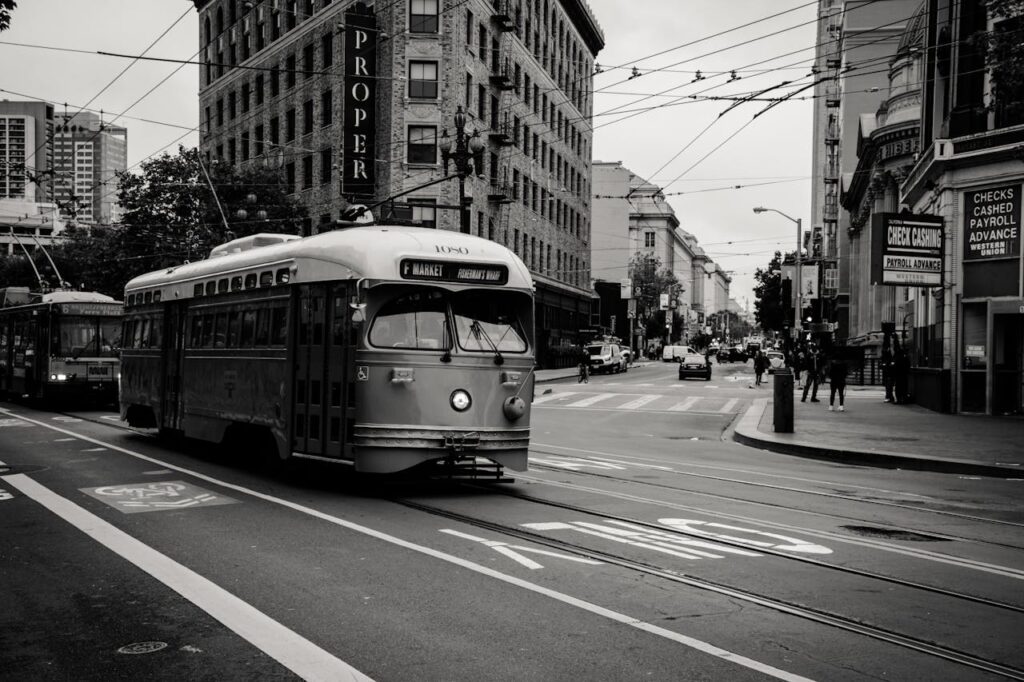
In San Francisco, the situation feels very different. Parking is limited, insurance costs more, and many neighborhoods restrict long-term vehicle storage without residential permits. Because of this, residents often choose to rely on public transportation instead of driving. The city runs an extensive network that includes BART, Muni buses, streetcars, and cable cars. Caltrain also connects the two cities, making it possible to commute between them without a car. Walking and cycling are more common in San Francisco due to its compact layout and strong transit coverage. Ridesharing services remain popular, especially in areas where parking a personal car is difficult.
Anyone moving should consider whether to keep a vehicle or adjust to a transit-based lifestyle. Weighing factors such as commuting distance, work location, and neighborhood access helps determine the smartest choice. Planning ahead avoids unnecessary costs and creates an easier adjustment to daily travel. For those relocating, it is also a good idea to hire top movers in San Francisco, who are the best!
Lifestyle and Pace of Living
Life in San Jose and San Francisco feels very different, even though the two cities sit close together. San Jose offers more space, larger homes, and quieter neighborhoods. Families often enjoy backyards, wider streets, and a suburban pace that makes daily routines predictable. Driving to stores, schools, or offices is common, and many activities revolve around residential areas spread across the South Bay.
In contrast, San Francisco delivers a faster rhythm. Apartments tend to be smaller, streets busier, and entertainment closer. People walk more, ride public transit, and live within blocks of restaurants, cafes, and shops. Each neighborhood has its own personality, giving residents the chance to experience different atmospheres without traveling far. The compact layout creates a more urban lifestyle that rewards flexibility and energy.
For those used to suburban calm, the change may feel overwhelming at first. Over time, however, many residents come to enjoy the variety of experiences available daily. San Francisco encourages social interaction, cultural exploration, and community events, while San Jose emphasizes comfort, space, and stability. Adjusting requires an open mindset and a willingness to adapt to a new rhythm. Understanding these differences before the move helps set expectations and makes the adjustment easier.

Moving From San Jose to San Francisco – The Relocation Process
Relocating from San Jose to San Francisco may cover fewer than fifty miles, but the process still takes careful planning. The short distance can feel misleading, since moving into a denser city requires more preparation. Apartments in San Francisco often come with smaller floor plans, limited parking, and stricter building rules. That means families and professionals need to prepare in advance and organize every stage of the move. To keep everything on track, focus on these main steps:
- Create a detailed timeline at least six weeks before the move.
- Sort and downsize belongings to fit smaller living spaces in San Francisco.
- Research moving companies with experience in Bay Area relocations.
- Apply for moving or parking permits required for trucks in San Francisco.
- Reserve storage space if your new home lacks room for all belongings.
- Plan moving day logistics to avoid rush-hour traffic on major highways.
Breaking the relocation into steps makes the move less stressful and keeps the process organized. With preparation, the shift from San Jose to San Francisco becomes easy and more manageable.
Book movers early
The main reason why you want to book your moving assistance as early as possible is reliability. This is especially important if you are planning to relocate during the “moving season” which is summer. By booking early, you can all but guarantee the moving date of your choice and make the relocation much more convenient. If you happen to delay booking movers to the last minute, you may also experience higher relocation costs. If you want to find the best deal and get discounts, you will want to start looking for a moving company well in advance!

Your Next Chapter in San Francisco Awaits!
Moving from San Jose to San Francisco requires more planning than the short distance suggests. Higher housing costs, parking challenges, and smaller spaces demand preparation. Downsizing before the move reduces stress, while early research on permits and storage prevents last-minute issues. Families should study schools carefully, while workers should confirm job adjustments and salaries. Despite the challenges, San Francisco offers rewarding opportunities, strong communities, and endless entertainment. Careful planning allows you to move with confidence and settle into your new life easily!